
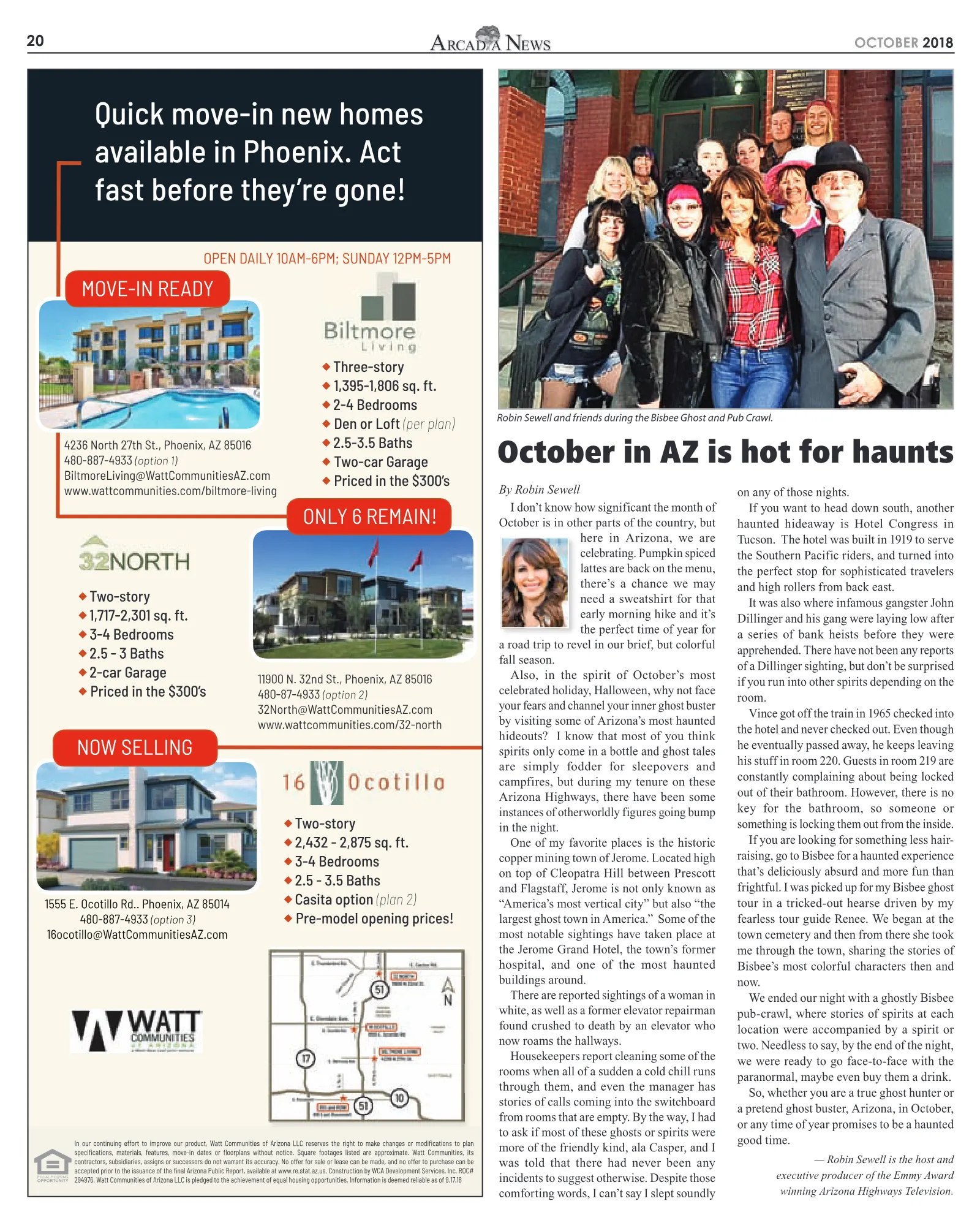
20 OCTOBER 2018 By Robin Sewell I don’t know how significant the month of October is in other parts of the country, but here in Arizona, we are celebrating. Pumpkin spiced lattes are back on the menu, there’s a chance we may need a sweatshirt for that early morning hike and it’s the perfect time of year for a road trip to revel in our brief, but colorful fall season. Also, in the spirit of October’s most celebrated holiday, Halloween, why not face your fears and channel your inner ghost buster by visiting some of Arizona’s most haunted hideouts? I know that most of you think spirits only come in a bottle and ghost tales are simply fodder for sleepovers and campfires, but during my tenure on these Arizona Highways, there have been some instances of otherworldly figures going bump in the night. One of my favorite places is the historic copper mining town of Jerome. Located high on top of Cleopatra Hill between Prescott and Flagstaff, Jerome is not only known as “America’s most vertical city” but also “the largest ghost town in America.” Some of the most notable sightings have taken place at the Jerome Grand Hotel, the town’s former hospital, and one of the most haunted buildings around. There are reported sightings of a woman in white, as well as a former elevator repairman found crushed to death by an elevator who now roams the hallways. Housekeepers report cleaning some of the rooms when all of a sudden a cold chill runs through them, and even the manager has stories of calls coming into the switchboard from rooms that are empty. By the way, I had to ask if most of these ghosts or spirits were more of the friendly kind, ala Casper, and I was told that there had never been any incidents to suggest otherwise. Despite those comforting words, I can’t say I slept soundly on any of those nights. If you want to head down south, another haunted hideaway is Hotel Congress in Tucson. The hotel was built in 1919 to serve the Southern Pacific riders, and turned into the perfect stop for sophisticated travelers and high rollers from back east. It was also where infamous gangster John Dillinger and his gang were laying low after a series of bank heists before they were apprehended. There have not been any reports of a Dillinger sighting, but don’t be surprised if you run into other spirits depending on the room. Vince got off the train in 1965 checked into the hotel and never checked out. Even though he eventually passed away, he keeps leaving his stuff in room 220. Guests in room 219 are constantly complaining about being locked out of their bathroom. However, there is no key for the bathroom, so someone or something is locking them out from the inside. If you are looking for something less hair- raising, go to Bisbee for a haunted experience that’s deliciously absurd and more fun than frightful. I was picked up for my Bisbee ghost tour in a tricked-out hearse driven by my fearless tour guide Renee. We began at the town cemetery and then from there she took me through the town, sharing the stories of Bisbee’s most colorful characters then and now. We ended our night with a ghostly Bisbee pub-crawl, where stories of spirits at each location were accompanied by a spirit or two. Needless to say, by the end of the night, we were ready to go face-to-face with the paranormal, maybe even buy them a drink. So, whether you are a true ghost hunter or a pretend ghost buster, Arizona, in October, or any time of year promises to be a haunted good time. — Robin Sewell is the host and executive producer of the Emmy Award winning Arizona Highways Television. October in AZ is hot for haunts Robin Sewell and friends during the Bisbee Ghost and Pub Crawl.
21 OCTOBER 2018 By Michelle Donati-Grayman Talking about safe driving concerns with a senior citizen can be challenging, but it’s an important conversation to have. Unfortunately, not enough older Americans are having these discussions. Nearly 83 percent of older drivers report never speaking about their safe driving abilities to a family member or doctor, according to new research from the AAA Foundation for Traffic Safety. Of the small percentage of families who do have a conversation, 15 percent do so after a crash or traffic infraction has occurred — which could be too late. Due to their fragility, older drivers are at greater risk of death and injury if involved in a crash. In 2016, more than 3,500 drivers age 65 and older died in traffic crashes and more than 200,000 were injured. With seniors currently outliving their ability to drive safely by an average of seven to 10 years, AAA urges families to avoid waiting to talk with older drivers about safety and help seniors plan for “driving retirement” just as they plan for financial retirement. “The right time to stop driving varies for everyone,” said Dr. David Yang, executive director of the AAA Foundation of Traffic Safety. “This research shows that older drivers can be hesitant to initiate conversations about their driving capabilities, so it is important that families encourage them to talk early and often about their future behind the wheel. With early discussion and proper planning, elderly drivers may extend their time on the road.” AAA recommends that families start talking with older adults about safe driving early and avoid waiting until there are red flags such as crashes, scrapes on the car, new medical diagnoses or worsening health conditions. Families should: • Start talking early and often. Be positive and supportive in your conversations, as well as focus on ways to help keep older drivers in your family safe behind the wheel. • Avoid generalizations. Do not jump to conclusions about an older driver’s skills or abilities. • Speak one-on-one. Keep the discussion between you and the older driver. Inviting the whole family to the conversation can create feelings of alienation or anger. • Focus on the facts. Stick to information you know, such as a medical condition or medication regimen that might make driving unsafe. Do not accuse an older driver of being unsafe or assume that driving should be stopped altogether. It is important that families have a plan to help keep the older driver on the road for as long as safely possible. Previous AAA Foundation research found that older adults who have stopped driving are almost twice as likely to suffer from depression and nearly five times as likely to enter a long-term care facility as those who remain behind the wheel. That is why it is important to have the conversation early and explore all available options, including other forms of transportation. For more: SeniorDriving.AAA.com Drivers safety for seniors