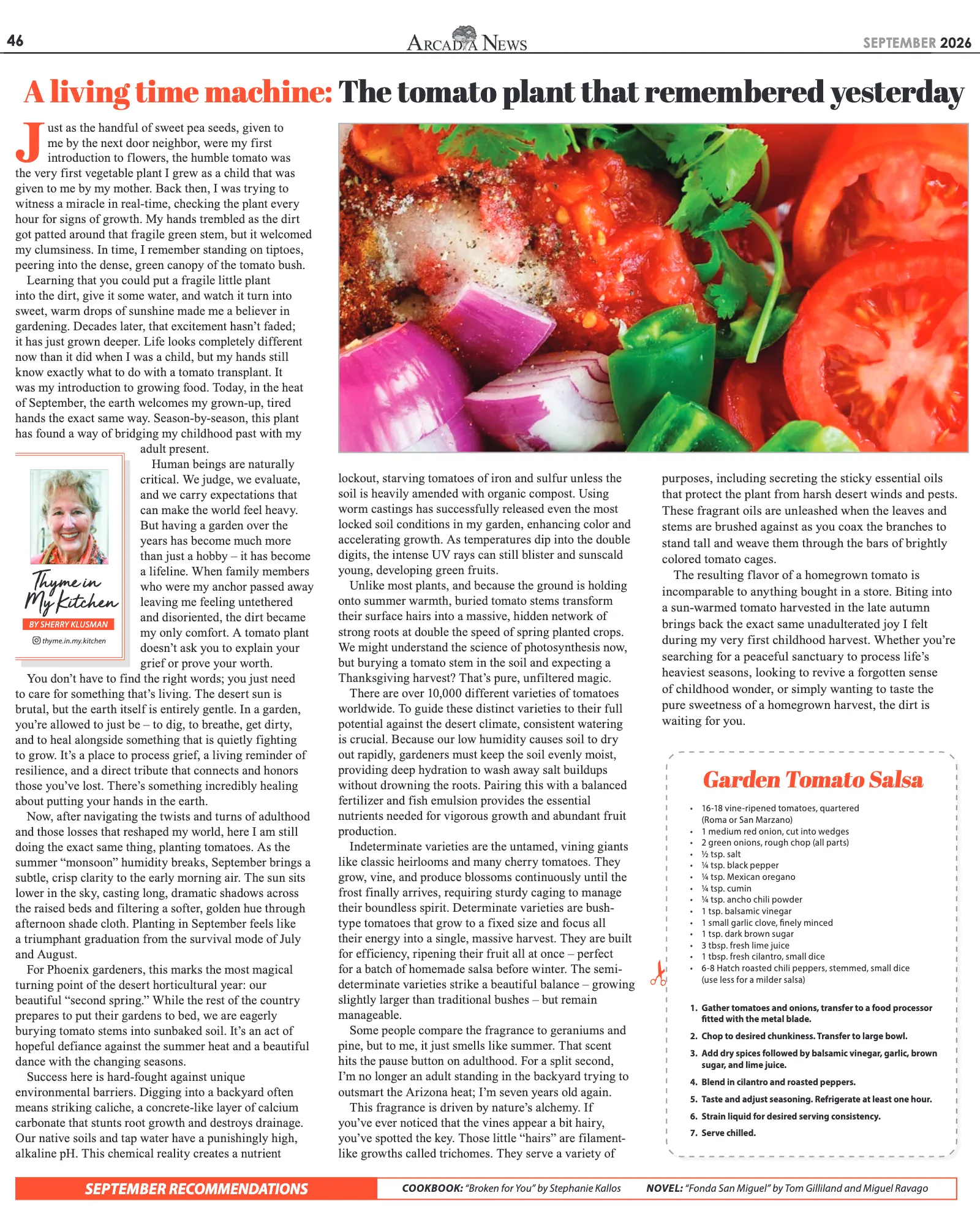

SEPTEMBER 2026 46 J ust as the handful of sweet pea seeds, given to me by the next door neighbor, were my first introduction to flowers, the humble tomato was the very first vegetable plant I grew as a child that was given to me by my mother. Back then, I was trying to witness a miracle in real-time, checking the plant every hour for signs of growth. My hands trembled as the dirt got patted around that fragile green stem, but it welcomed my clumsiness. In time, I remember standing on tiptoes, peering into the dense, green canopy of the tomato bush. Learning that you could put a fragile little plant into the dirt, give it some water, and watch it turn into sweet, warm drops of sunshine made me a believer in gardening. Decades later, that excitement hasn’t faded; it has just grown deeper. Life looks completely different now than it did when I was a child, but my hands still know exactly what to do with a tomato transplant. It was my introduction to growing food. Today, in the heat of September, the earth welcomes my grown-up, tired hands the exact same way. Season-by-season, this plant has found a way of bridging my childhood past with my adult present. Human beings are naturally critical. We judge, we evaluate, and we carry expectations that can make the world feel heavy. But having a garden over the years has become much more than just a hobby – it has become a lifeline. When family members who were my anchor passed away leaving me feeling untethered and disoriented, the dirt became my only comfort. A tomato plant doesn’t ask you to explain your grief or prove your worth. You don’t have to find the right words; you just need to care for something that’s living. The desert sun is brutal, but the earth itself is entirely gentle. In a garden, you’re allowed to just be – to dig, to breathe, get dirty, and to heal alongside something that is quietly fighting to grow. It’s a place to process grief, a living reminder of resilience, and a direct tribute that connects and honors those you’ve lost. There’s something incredibly healing about putting your hands in the earth. Now, after navigating the twists and turns of adulthood and those losses that reshaped my world, here I am still doing the exact same thing, planting tomatoes. As the summer “monsoon” humidity breaks, September brings a subtle, crisp clarity to the early morning air. The sun sits lower in the sky, casting long, dramatic shadows across the raised beds and filtering a softer, golden hue through afternoon shade cloth. Planting in September feels like a triumphant graduation from the survival mode of July and August. For Phoenix gardeners, this marks the most magical turning point of the desert horticultural year: our beautiful “second spring.” While the rest of the country prepares to put their gardens to bed, we are eagerly burying tomato stems into sunbaked soil. It’s an act of hopeful defiance against the summer heat and a beautiful dance with the changing seasons. Success here is hard-fought against unique environmental barriers. Digging into a backyard often means striking caliche, a concrete-like layer of calcium carbonate that stunts root growth and destroys drainage. Our native soils and tap water have a punishingly high, alkaline pH. This chemical reality creates a nutrient lockout, starving tomatoes of iron and sulfur unless the soil is heavily amended with organic compost. Using worm castings has successfully released even the most locked soil conditions in my garden, enhancing color and accelerating growth. As temperatures dip into the double digits, the intense UV rays can still blister and sunscald young, developing green fruits. Unlike most plants, and because the ground is holding onto summer warmth, buried tomato stems transform their surface hairs into a massive, hidden network of strong roots at double the speed of spring planted crops. We might understand the science of photosynthesis now, but burying a tomato stem in the soil and expecting a Thanksgiving harvest? That’s pure, unfiltered magic. There are over 10,000 different varieties of tomatoes worldwide. To guide these distinct varieties to their full potential against the desert climate, consistent watering is crucial. Because our low humidity causes soil to dry out rapidly, gardeners must keep the soil evenly moist, providing deep hydration to wash away salt buildups without drowning the roots. Pairing this with a balanced fertilizer and fish emulsion provides the essential nutrients needed for vigorous growth and abundant fruit production. Indeterminate varieties are the untamed, vining giants like classic heirlooms and many cherry tomatoes. They grow, vine, and produce blossoms continuously until the frost finally arrives, requiring sturdy caging to manage their boundless spirit. Determinate varieties are bush- type tomatoes that grow to a fixed size and focus all their energy into a single, massive harvest. They are built for efficiency, ripening their fruit all at once – perfect for a batch of homemade salsa before winter. The semi- determinate varieties strike a beautiful balance – growing slightly larger than traditional bushes – but remain manageable. Some people compare the fragrance to geraniums and pine, but to me, it just smells like summer. That scent hits the pause button on adulthood. For a split second, I’m no longer an adult standing in the backyard trying to outsmart the Arizona heat; I’m seven years old again. This fragrance is driven by nature’s alchemy. If you’ve ever noticed that the vines appear a bit hairy, you’ve spotted the key. Those little “hairs” are filament- like growths called trichomes. They serve a variety of purposes, including secreting the sticky essential oils that protect the plant from harsh desert winds and pests. These fragrant oils are unleashed when the leaves and stems are brushed against as you coax the branches to stand tall and weave them through the bars of brightly colored tomato cages. The resulting flavor of a homegrown tomato is incomparable to anything bought in a store. Biting into a sun-warmed tomato harvested in the late autumn brings back the exact same unadulterated joy I felt during my very first childhood harvest. Whether you’re searching for a peaceful sanctuary to process life’s heaviest seasons, looking to revive a forgotten sense of childhood wonder, or simply wanting to taste the pure sweetness of a homegrown harvest, the dirt is waiting for you. Thyme in My Kitchen BY SHERRY KLUSMAN thyme.in.my.kitchen • 16-18 vine-ripened tomatoes, quartered (Roma or San Marzano) • 1 medium red onion, cut into wedges • 2 green onions, rough chop (all parts) • ½ tsp. salt • ¼ tsp. black pepper • ¼ tsp. Mexican oregano • ¼ tsp. cumin • ¼ tsp. ancho chili powder • 1 tsp. balsamic vinegar • 1 small garlic clove, finely minced • 1 tsp. dark brown sugar • 3 tbsp. fresh lime juice • 1 tbsp. fresh cilantro, small dice • 6-8 Hatch roasted chili peppers, stemmed, small dice (use less for a milder salsa) 1. Gather tomatoes and onions, transfer to a food processor fitted with the metal blade. 2. Chop to desired chunkiness. Transfer to large bowl. 3. Add dry spices followed by balsamic vinegar, garlic, brown sugar, and lime juice. 4. Blend in cilantro and roasted peppers. 5. Taste and adjust seasoning. Refrigerate at least one hour. 6. Strain liquid for desired serving consistency. 7. Serve chilled. Garden Tomato Salsa A living time machine: The tomato plant that remembered yesterday SEPTEMBER RECOMMENDATIONS COOKBOOK: “Broken for You” by Stephanie Kallos NOVEL: “Fonda San Miguel” by Tom Gilliland and Miguel Ravago