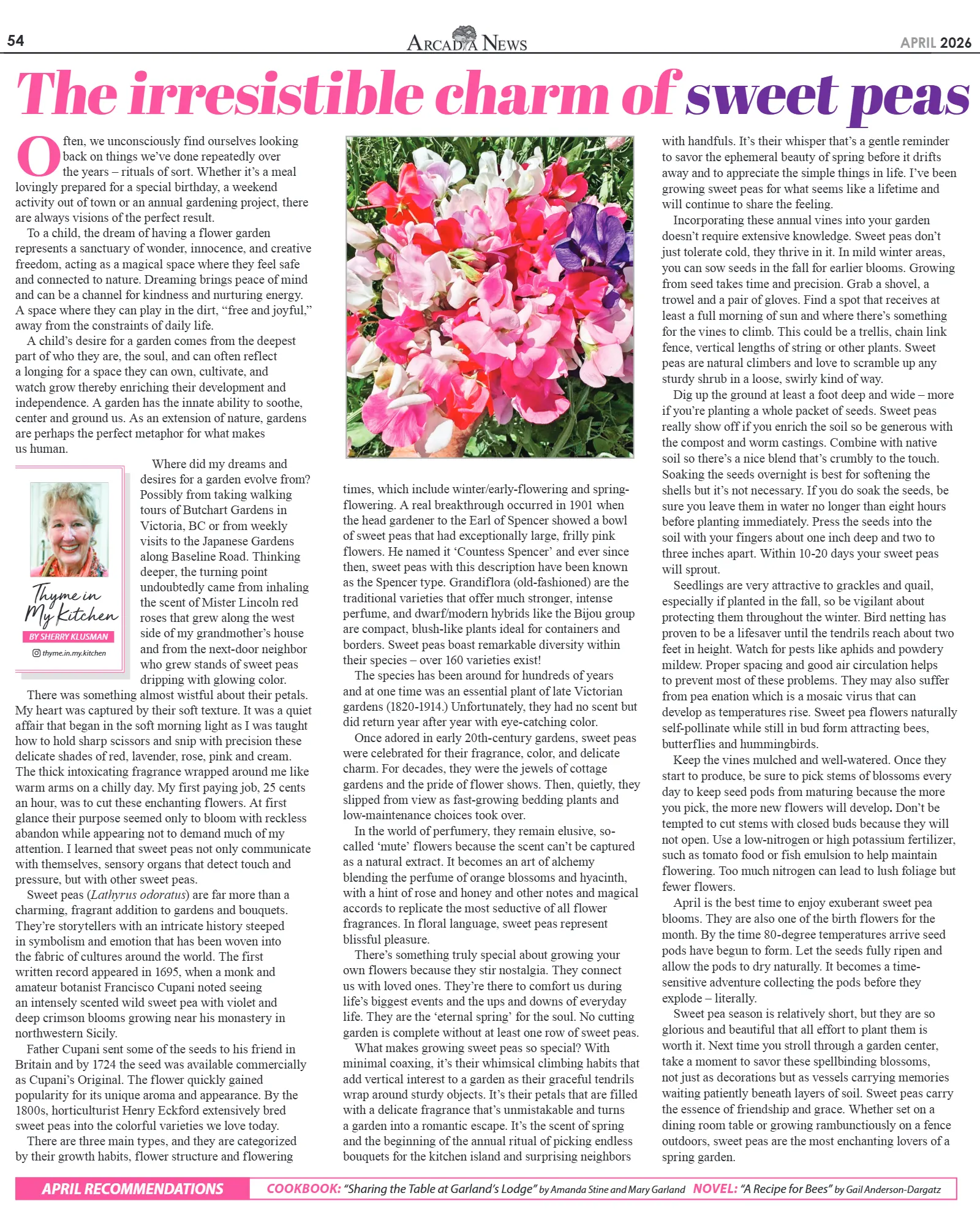

APRIL 2026 54 O ften, we unconsciously find ourselves looking back on things we’ve done repeatedly over the years – rituals of sort. Whether it’s a meal lovingly prepared for a special birthday, a weekend activity out of town or an annual gardening project, there are always visions of the perfect result. To a child, the dream of having a flower garden represents a sanctuary of wonder, innocence, and creative freedom, acting as a magical space where they feel safe and connected to nature. Dreaming brings peace of mind and can be a channel for kindness and nurturing energy. A space where they can play in the dirt, “free and joyful,” away from the constraints of daily life. A child’s desire for a garden comes from the deepest part of who they are, the soul, and can often reflect a longing for a space they can own, cultivate, and watch grow thereby enriching their development and independence. A garden has the innate ability to soothe, center and ground us. As an extension of nature, gardens are perhaps the perfect metaphor for what makes us human. Where did my dreams and desires for a garden evolve from? Possibly from taking walking tours of Butchart Gardens in Victoria, BC or from weekly visits to the Japanese Gardens along Baseline Road. Thinking deeper, the turning point undoubtedly came from inhaling the scent of Mister Lincoln red roses that grew along the west side of my grandmother’s house and from the next-door neighbor who grew stands of sweet peas dripping with glowing color. There was something almost wistful about their petals. My heart was captured by their soft texture. It was a quiet affair that began in the soft morning light as I was taught how to hold sharp scissors and snip with precision these delicate shades of red, lavender, rose, pink and cream. The thick intoxicating fragrance wrapped around me like warm arms on a chilly day. My first paying job, 25 cents an hour, was to cut these enchanting flowers. At first glance their purpose seemed only to bloom with reckless abandon while appearing not to demand much of my attention. I learned that sweet peas not only communicate with themselves, sensory organs that detect touch and pressure, but with other sweet peas. Sweet peas ( Lathyrus odoratus ) are far more than a charming, fragrant addition to gardens and bouquets. They’re storytellers with an intricate history steeped in symbolism and emotion that has been woven into the fabric of cultures around the world. The first written record appeared in 1695, when a monk and amateur botanist Francisco Cupani noted seeing an intensely scented wild sweet pea with violet and deep crimson blooms growing near his monastery in northwestern Sicily. Father Cupani sent some of the seeds to his friend in Britain and by 1724 the seed was available commercially as Cupani’s Original. The flower quickly gained popularity for its unique aroma and appearance. By the 1800s, horticulturist Henry Eckford extensively bred sweet peas into the colorful varieties we love today. There are three main types, and they are categorized by their growth habits, flower structure and flowering times, which include winter/early-flowering and spring- flowering. A real breakthrough occurred in 1901 when the head gardener to the Earl of Spencer showed a bowl of sweet peas that had exceptionally large, frilly pink flowers. He named it ‘Countess Spencer’ and ever since then, sweet peas with this description have been known as the Spencer type. Grandiflora (old-fashioned) are the traditional varieties that offer much stronger, intense perfume, and dwarf/modern hybrids like the Bijou group are compact, blush-like plants ideal for containers and borders. Sweet peas boast remarkable diversity within their species – over 160 varieties exist! The species has been around for hundreds of years and at one time was an essential plant of late Victorian gardens (1820-1914.) Unfortunately, they had no scent but did return year after year with eye-catching color. Once adored in early 20th-century gardens, sweet peas were celebrated for their fragrance, color, and delicate charm. For decades, they were the jewels of cottage gardens and the pride of flower shows. Then, quietly, they slipped from view as fast-growing bedding plants and low-maintenance choices took over. In the world of perfumery, they remain elusive, so- called ‘mute’ flowers because the scent can’t be captured as a natural extract. It becomes an art of alchemy blending the perfume of orange blossoms and hyacinth, with a hint of rose and honey and other notes and magical accords to replicate the most seductive of all flower fragrances. In floral language, sweet peas represent blissful pleasure. There’s something truly special about growing your own flowers because they stir nostalgia. They connect us with loved ones. They’re there to comfort us during life’s biggest events and the ups and downs of everyday life. They are the ‘eternal spring’ for the soul. No cutting garden is complete without at least one row of sweet peas. What makes growing sweet peas so special? With minimal coaxing, it’s their whimsical climbing habits that add vertical interest to a garden as their graceful tendrils wrap around sturdy objects. It’s their petals that are filled with a delicate fragrance that’s unmistakable and turns a garden into a romantic escape. It’s the scent of spring and the beginning of the annual ritual of picking endless bouquets for the kitchen island and surprising neighbors with handfuls. It’s their whisper that’s a gentle reminder to savor the ephemeral beauty of spring before it drifts away and to appreciate the simple things in life. I’ve been growing sweet peas for what seems like a lifetime and will continue to share the feeling. Incorporating these annual vines into your garden doesn’t require extensive knowledge. Sweet peas don’t just tolerate cold, they thrive in it. In mild winter areas, you can sow seeds in the fall for earlier blooms. Growing from seed takes time and precision. Grab a shovel, a trowel and a pair of gloves. Find a spot that receives at least a full morning of sun and where there’s something for the vines to climb. This could be a trellis, chain link fence, vertical lengths of string or other plants. Sweet peas are natural climbers and love to scramble up any sturdy shrub in a loose, swirly kind of way. Dig up the ground at least a foot deep and wide – more if you’re planting a whole packet of seeds. Sweet peas really show off if you enrich the soil so be generous with the compost and worm castings. Combine with native soil so there’s a nice blend that’s crumbly to the touch. Soaking the seeds overnight is best for softening the shells but it’s not necessary. If you do soak the seeds, be sure you leave them in water no longer than eight hours before planting immediately. Press the seeds into the soil with your fingers about one inch deep and two to three inches apart. Within 10-20 days your sweet peas will sprout. Seedlings are very attractive to grackles and quail, especially if planted in the fall, so be vigilant about protecting them throughout the winter. Bird netting has proven to be a lifesaver until the tendrils reach about two feet in height. Watch for pests like aphids and powdery mildew. Proper spacing and good air circulation helps to prevent most of these problems. They may also suffer from pea enation which is a mosaic virus that can develop as temperatures rise. Sweet pea flowers naturally self-pollinate while still in bud form attracting bees, butterflies and hummingbirds. Keep the vines mulched and well-watered. Once they start to produce, be sure to pick stems of blossoms every day to keep seed pods from maturing because the more you pick, the more new flowers will develop . Don’t be tempted to cut stems with closed buds because they will not open. Use a low-nitrogen or high potassium fertilizer, such as tomato food or fish emulsion to help maintain flowering. Too much nitrogen can lead to lush foliage but fewer flowers. April is the best time to enjoy exuberant sweet pea blooms. They are also one of the birth flowers for the month. By the time 80-degree temperatures arrive seed pods have begun to form. Let the seeds fully ripen and allow the pods to dry naturally. It becomes a time- sensitive adventure collecting the pods before they explode – literally. Sweet pea season is relatively short, but they are so glorious and beautiful that all effort to plant them is worth it. Next time you stroll through a garden center, take a moment to savor these spellbinding blossoms, not just as decorations but as vessels carrying memories waiting patiently beneath layers of soil. Sweet peas carry the essence of friendship and grace. Whether set on a dining room table or growing rambunctiously on a fence outdoors, sweet peas are the most enchanting lovers of a spring garden. Thyme in My Kitchen BY SHERRY KLUSMAN thyme.in.my.kitchen The irresistible charm of sweet peas APRIL RECOMMENDATIONS COOKBOOK: “Sharing the Table at Garland’s Lodge” by Amanda Stine and Mary Garland NOVEL: “A Recipe for Bees” by Gail Anderson-Dargatz