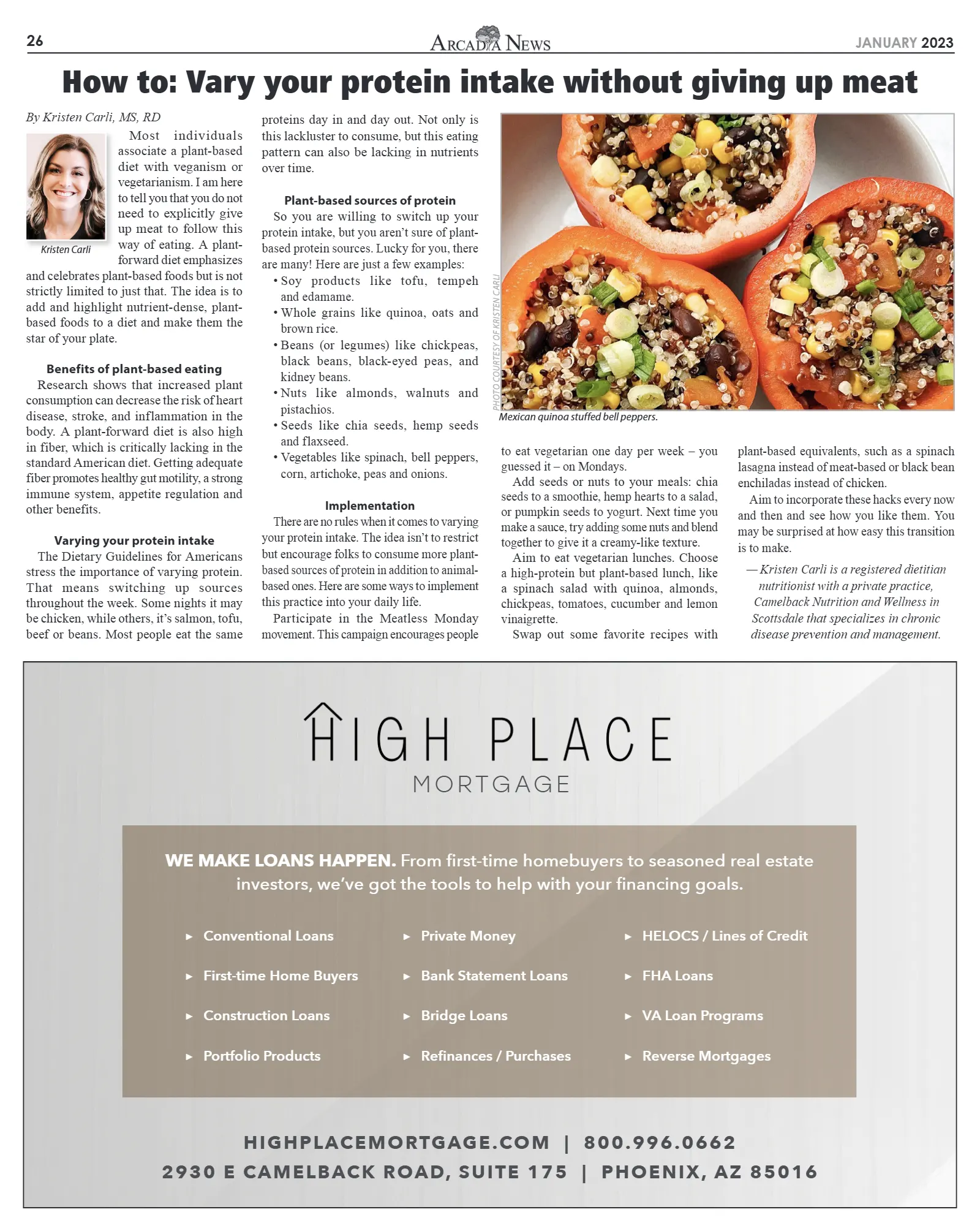

26 JANUARY 2023 By Kristen Carli, MS, RD Most individuals associate a plant-based diet with veganism or vegetarianism. I am here to tell you that you do not need to explicitly give up meat to follow this way of eating. A plant- forward diet emphasizes and celebrates plant-based foods but is not strictly limited to just that. The idea is to add and highlight nutrient-dense, plant- based foods to a diet and make them the star of your plate. Benefits of plant-based eating Research shows that increased plant consumption can decrease the risk of heart disease, stroke, and inflammation in the body. A plant-forward diet is also high in fiber, which is critically lacking in the standard American diet. Getting adequate fiber promotes healthy gut motility, a strong immune system, appetite regulation and other benefits. Varying your protein intake The Dietary Guidelines for Americans stress the importance of varying protein. That means switching up sources throughout the week. Some nights it may be chicken, while others, it’s salmon, tofu, beef or beans. Most people eat the same proteins day in and day out. Not only is this lackluster to consume, but this eating pattern can also be lacking in nutrients over time. Plant-based sources of protein So you are willing to switch up your protein intake, but you aren’t sure of plant- based protein sources. Lucky for you, there are many! Here are just a few examples: • Soy products like tofu, tempeh and edamame. • Whole grains like quinoa, oats and brown rice. • Beans (or legumes) like chickpeas, black beans, black-eyed peas, and kidney beans. • Nuts like almonds, walnuts and pistachios. • Seeds like chia seeds, hemp seeds and flaxseed. • Vegetables like spinach, bell peppers, corn, artichoke, peas and onions. Implementation There are no rules when it comes to varying your protein intake. The idea isn’t to restrict but encourage folks to consume more plant- based sources of protein in addition to animal- based ones. Here are some ways to implement this practice into your daily life. Participate in the Meatless Monday movement. This campaign encourages people to eat vegetarian one day per week – you guessed it – on Mondays. Add seeds or nuts to your meals: chia seeds to a smoothie, hemp hearts to a salad, or pumpkin seeds to yogurt. Next time you make a sauce, try adding some nuts and blend together to give it a creamy-like texture. Aim to eat vegetarian lunches. Choose a high-protein but plant-based lunch, like a spinach salad with quinoa, almonds, chickpeas, tomatoes, cucumber and lemon vinaigrette. Swap out some favorite recipes with plant-based equivalents, such as a spinach lasagna instead of meat-based or black bean enchiladas instead of chicken. Aim to incorporate these hacks every now and then and see how you like them. You may be surprised at how easy this transition is to make. — Kristen Carli is a registered dietitian nutritionist with a private practice, Camelback Nutrition and Wellness in Scottsdale that specializes in chronic disease prevention and management. How to: Vary your protein intake without giving up meat Mexican quinoa stuffed bell peppers. PHOTO COURTESY OF KRISTEN CARLI Kristen Carli HIGHPLACEMORTGAGE.COM | 800.996.0662 2930 E CAMELBACK ROAD, SUITE 175 | PHOENIX, AZ 85016 ▶ Conventional Loans ▶ First-time Home Buyers ▶ Construction Loans ▶ Portfolio Products ▶ Private Money ▶ Bank Statement Loans ▶ Bridge Loans ▶ Refinances / Purchases ▶ HELOCS / Lines of Credit ▶ FHA Loans ▶ VA Loan Programs ▶ Reverse Mortgages WE MAKE LOANS HAPPEN. From first-time homebuyers to seasoned real estate investors, we’ve got the tools to help with your financing goals. M O R T G AG E