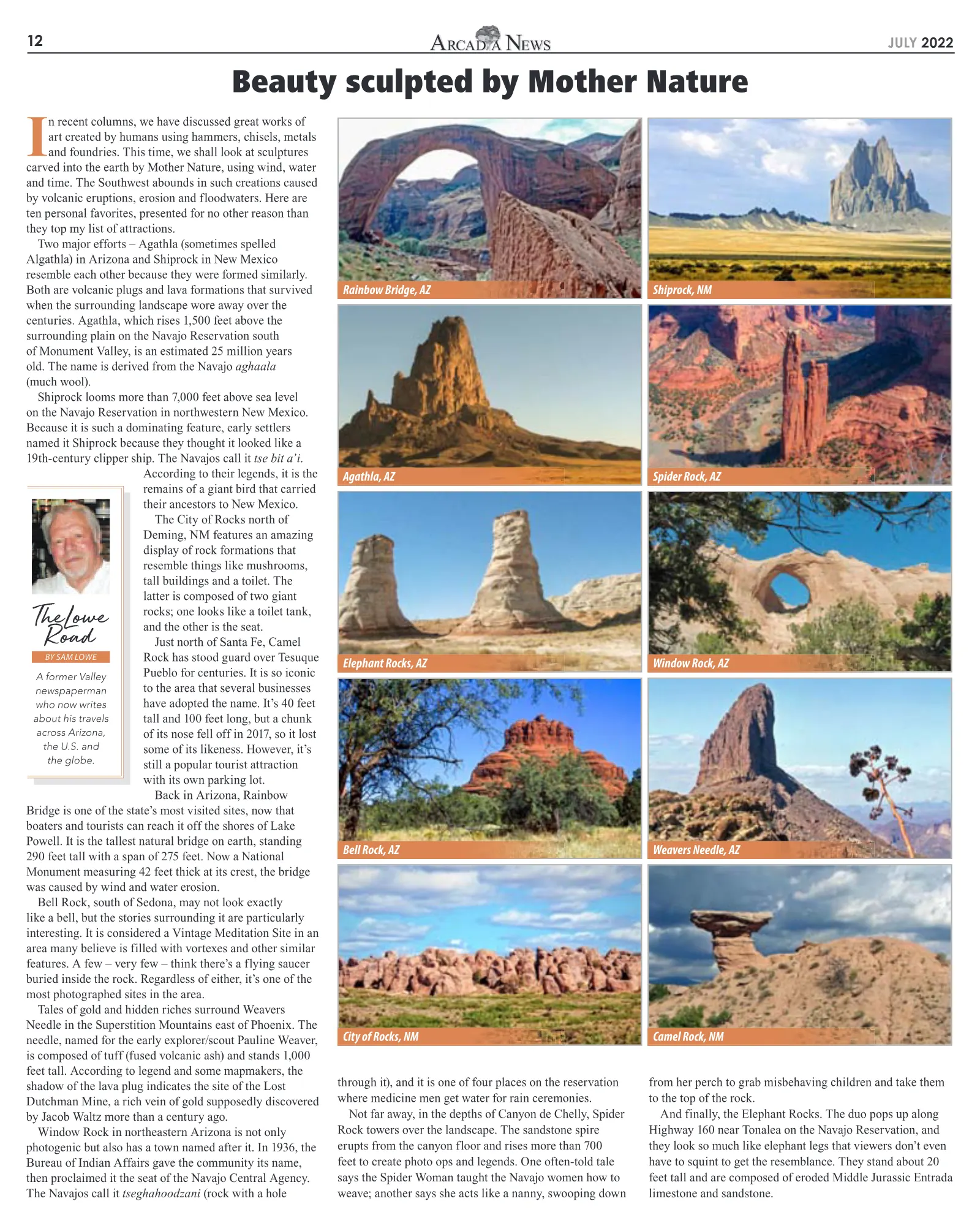

12 JULY 2022 I n recent columns, we have discussed great works of art created by humans using hammers, chisels, metals and foundries. This time, we shall look at sculptures carved into the earth by Mother Nature, using wind, water and time. The Southwest abounds in such creations caused by volcanic eruptions, erosion and floodwaters. Here are ten personal favorites, presented for no other reason than they top my list of attractions. Two major efforts – Agathla (sometimes spelled Algathla) in Arizona and Shiprock in New Mexico resemble each other because they were formed similarly. Both are volcanic plugs and lava formations that survived when the surrounding landscape wore away over the centuries. Agathla, which rises 1,500 feet above the surrounding plain on the Navajo Reservation south of Monument Valley, is an estimated 25 million years old. The name is derived from the Navajo aghaala (much wool). Shiprock looms more than 7,000 feet above sea level on the Navajo Reservation in northwestern New Mexico. Because it is such a dominating feature, early settlers named it Shiprock because they thought it looked like a 19th-century clipper ship. The Navajos call it tse bit a’i . According to their legends, it is the remains of a giant bird that carried their ancestors to New Mexico. The City of Rocks north of Deming, NM features an amazing display of rock formations that resemble things like mushrooms, tall buildings and a toilet. The latter is composed of two giant rocks; one looks like a toilet tank, and the other is the seat. Just north of Santa Fe, Camel Rock has stood guard over Tesuque Pueblo for centuries. It is so iconic to the area that several businesses have adopted the name. It’s 40 feet tall and 100 feet long, but a chunk of its nose fell off in 2017, so it lost some of its likeness. However, it’s still a popular tourist attraction with its own parking lot. Back in Arizona, Rainbow Bridge is one of the state’s most visited sites, now that boaters and tourists can reach it off the shores of Lake Powell. It is the tallest natural bridge on earth, standing 290 feet tall with a span of 275 feet. Now a National Monument measuring 42 feet thick at its crest, the bridge was caused by wind and water erosion. Bell Rock, south of Sedona, may not look exactly like a bell, but the stories surrounding it are particularly interesting. It is considered a Vintage Meditation Site in an area many believe is filled with vortexes and other similar features. A few – very few – think there’s a flying saucer buried inside the rock. Regardless of either, it’s one of the most photographed sites in the area. Tales of gold and hidden riches surround Weavers Needle in the Superstition Mountains east of Phoenix. The needle, named for the early explorer/scout Pauline Weaver, is composed of tuff (fused volcanic ash) and stands 1,000 feet tall. According to legend and some mapmakers, the shadow of the lava plug indicates the site of the Lost Dutchman Mine, a rich vein of gold supposedly discovered by Jacob Waltz more than a century ago. Window Rock in northeastern Arizona is not only photogenic but also has a town named after it. In 1936, the Bureau of Indian Affairs gave the community its name, then proclaimed it the seat of the Navajo Central Agency. The Navajos call it tseghahoodzani (rock with a hole through it), and it is one of four places on the reservation where medicine men get water for rain ceremonies. Not far away, in the depths of Canyon de Chelly, Spider Rock towers over the landscape. The sandstone spire erupts from the canyon floor and rises more than 700 feet to create photo ops and legends. One often-told tale says the Spider Woman taught the Navajo women how to weave; another says she acts like a nanny, swooping down from her perch to grab misbehaving children and take them to the top of the rock. And finally, the Elephant Rocks. The duo pops up along Highway 160 near Tonalea on the Navajo Reservation, and they look so much like elephant legs that viewers don’t even have to squint to get the resemblance. They stand about 20 feet tall and are composed of eroded Middle Jurassic Entrada limestone and sandstone. Beauty sculpted by Mother Nature Rainbow Bridge, AZ Shiprock, NM Spider Rock, AZ Agathla, AZ Elephant Rocks, AZ Window Rock, AZ Weavers Needle, AZ Bell Rock, AZ City of Rocks, NM Camel Rock, NM The Lowe Road A former Valley newspaperman who now writes about his travels across Arizona, the U.S. and the globe. BY SAM LOWE